
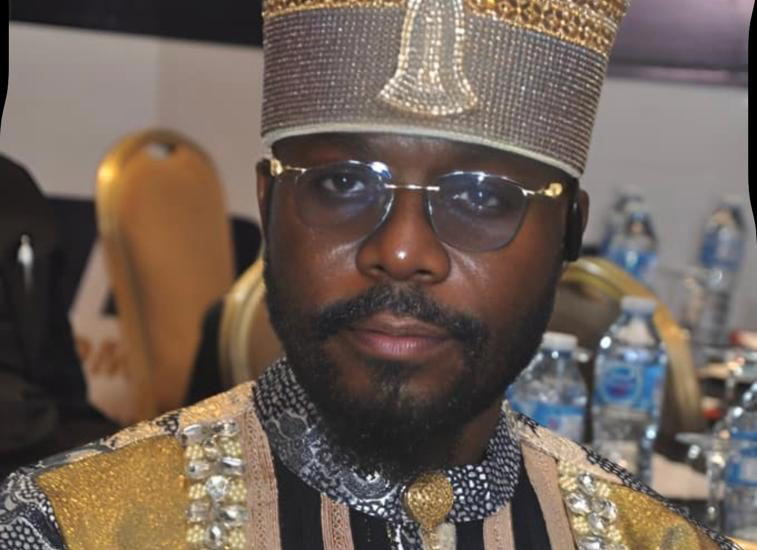
Dr. Israel Eshanekpe
By Sunday A. Onyewonsa
When His Worship, Eshanekpe Israel Agimor speaks, the creeks listen. Popularly known as “Akpodoro,” the Head of the Association of Urhobo Mayoral Family Crown, AUMFC, and Mayor of Urhobo Land, carries the weight of two identities: an ex-militant leader who once knew the creeks as a theatre of conflict, and now a Urhobo Mayor pressing for peace through economic inclusion.
His latest call is directed at the Federal Government and the Nigeria National Petroleum Company Limited, NNPCL. Akpodoro wants the operational scope of Tantita Security Services Nig. Ltd widened, the contract sum increased and the security surveillance net cast wider to accommodate “other genuine stakeholders in the Niger Delta project.”
Tantita, owned by ex-militant leader Chief Government Ekpemupolo, alias Tompolo, currently handles pipeline surveillance on the western axis of Nigeria’s waterways and land assets. Since taking over, the firm has been credited with drastic cuts in crude oil theft and pipeline vandalism. But Akpodoro argues that the job is not yet done, and the model can be made stronger.
His appeal comes at a time when Nigeria is desperate to ramp up crude production to meet OPEC quotas and fund the 2026 budget. Every barrel lost to theft is a hospital unbuilt, a road unpaved, a youth unemployed.
Nigeria still funds over 60% of its budget from oil revenue. Crude theft, once estimated at 200,000+ barrels per day, bled the nation of billions of dollars annually. Tantita’s intervention on the western corridor helped reverse that trend, pushing production back toward 1.7m bpd.
Akpodoro’s argument is simple math: more coverage = more barrels saved = more dollars for the federation account. “Widening Tantita’s operations means fewer leaks, fewer illegal connections, and more money for infrastructure, education, and health,” he said. “It is not about one company. It is about plugging holes in our national bucket.”
An increased contract sum, he contends, is not an expense but an investment. Better equipment, more gunboats, higher personnel welfare, and better intelligence all cost money. “You cannot buy national security on a discount,” the Urhobo Mayor quipped.
Akpodoro, who once led fighters in the creeks, understands the psychology. “A youth with a gunboat salary and a sense of purpose will not pick up arms against the state. Widening the scope means more jobs, more training, more youths taken off the street and put on payroll.”
That ripple effect is economic. Salaries get spent in local markets. Skills get transferred. Families get lifted. “This is how you demobilize militancy without firing a shot,” he added, stressing that, a secure pipeline corridor is a magnet for investment. Oil majors, modular refinery investors, and logistics firms all avoid zones tagged “high risk”. By expanding surveillance to more creeks and land assets, the region becomes bankable.
Akpodoro wants “other genuine stakeholders” — ex-militant leaders with genuine intentions and with good track records, community trusts, cooperatives, and indigenous security firms with verifiable track records — brought under a coordinated framework. “Inclusion kills suspicion. When communities feel ownership, they protect what is theirs,” he said. The result: more local contractors, more service businesses, and a Delta economy less dependent on handouts.
Security, Sovereignty, and The Well-Being Of The Nation… Dr. Akpodoro argued that, pipeline protection is never just about pipes. Vandals who attack pipelines also traffic arms, drugs, and humans through the same waterways. A stronger, wider Tantita presence means a stronger navy of community eyes and ears.
Akpodoro frames it as layered security: “When you secure the oil, you secure the waterways. When you secure the waterways, you reduce kidnapping, sea piracy, and illegal bunkering camps. The nation sleeps better.”
At the heart of Akpodoro’s call is a belief that Nigeria’s well-being is tied to oilfield stability. Higher production means stronger naira, lower fuel import pressure, and more fiscal room for social programmes.
Tantita’s current model employs thousands as guards, mechanics, medics, and boat captains. Akpodoro wants that scaled three times.
“A monthly salary does what bullets cannot,” he said. “It gives a young man dignity. He buys rice for his mother. He pays his sister’s school fees. He stops seeing vandalism as a career.”
Widening scope equals more training centers, more certifications, and more youths with transferable skills. Some will stay in security. Others will move to welding, logistics, marine engineering.
Akpodoro further his argument saying, investors follow Stability stating that no modular refinery investor signs in a ‘red zone’. Akpodoro stressed that expanded surveillance turns the Delta from ‘risk’ to ‘opportunity’.
“When pipelines are safe, investors come,” he said. “They build plants. They hire locally. They pay taxes. That’s how we move from dependence to production.”
“We don’t need 100 companies,” he added. “We need 10 credible ones working under one command. Unity, not chaos.”
To the powers that be in Abuja, Akpodoro in his final message is short: Act fast, act bold.
1. Expand Tantita’s operational map before Q2 2026
2. Review and increase the contract to match scope and inflation
3. Create a Delta Stakeholders Security Council with NNPCL, Navy, and verified community leaders
“Mr. President, NNPCL GCEO, the creeks are listening,” Akpodoro concluded. “Widen the net. Let Nigeria eat from the catch. We are ready to guard what belongs to all of us.”
_As Nigeria pushes for 2m bpd in 2026, Akpodoro’s call is simple: scale what works. Peace, payroll, and production can come from the same pipeline.
Disclaimer
Comments expressed here do not reflect the opinions of Vanguard newspapers or any employee thereof.