By Micahel Akande
When torrential rain pounded Lagos last week, the reaction was predictable. Major roads disappeared beneath floodwaters. Traffic ground to a halt across several parts of the metropolis. Businesses counted losses, commuters were stranded for hours and social media quickly filled with videos questioning why flooding continues despite years of government spending on drainage infrastructure.
The frustration was understandable. Every flood tells a human story of disrupted livelihoods, damaged property and lost productivity. For residents trapped in traffic or watching floodwater seep into their homes, explanations about climate change, drainage capacity or tidal movements offer little consolation.
Yet while Lagos struggled through another difficult day, events elsewhere in West Africa raised a question that deserves sober reflection: could the city have been confronting something far worse?
Neighbouring Ghana was at the same time grappling with one of its worst flood disasters in recent years. Entire communities around Accra were inundated. Homes and businesses were destroyed. Families were displaced, and emergency responders raced to rescue trapped residents.
When President John Mahama visited the affected communities, his response was instructive. He called for stricter planning regulations, stronger protection of waterways, improved drainage infrastructure and sustained investment in flood-control projects.
For many observers in Lagos, those recommendations sounded familiar. They are, in many respects, the same measures that have shaped the environmental policies of the Babajide Sanwo-Olu administration over the past several years.
That comparison does not suggest that Lagos has solved its flooding challenges. It clearly has not. The city still experiences flash floods after exceptionally heavy rainfall. Some drainage channels remain inadequate. Rapid urbanisation continues to place enormous pressure on infrastructure.
What the comparison does invite is a more balanced assessment of policies that have often generated public resistance.
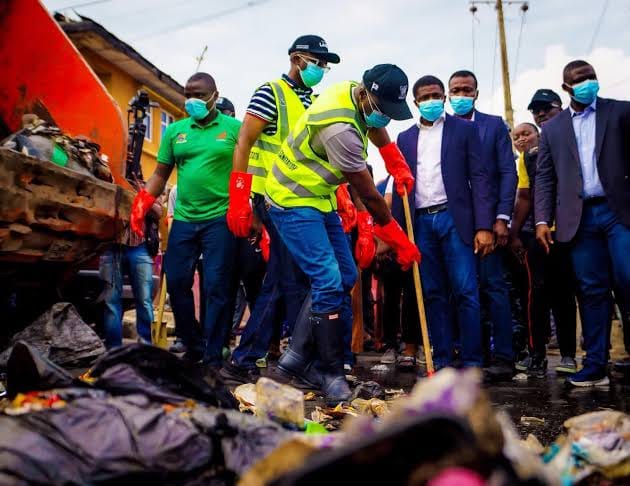
For years, Sanwo-Olu’s administration has embarked on continuous dredging of primary drainage channels and canals across the state. Hundreds of kilometres of drainage infrastructure have been rehabilitated and expanded. Waterways have undergone regular desilting, while blocked collectors have been cleared before and during every rainy season.
The government has also intensified enforcement against developments built on drainage alignments and natural floodplains. Structures obstructing waterways have been demolished, wetlands reclaimed illegally have been identified, and repeated warnings have been issued against indiscriminate refuse disposal into drains.
None of these actions has been politically convenient. Demolition exercises have provoked protests from affected property owners. Environmental enforcement has attracted accusations of insensitivity. Restrictions on developments in vulnerable areas have sometimes been criticised as anti-business.
Yet environmental analysts argue that flood management is one area where governments often have to choose between immediate popularity and long-term resilience.
Water does not recognize political arguments.
It follows the path available to it. Every blocked drainage channel reduces the city’s capacity to evacuate stormwater. Every encroached floodplain narrows the natural routes through which excess water should flow. Every canal left unattended increases the risk that ordinary rainfall could become a major disaster.
That reality is especially important in Lagos. Unlike most Nigerian cities, Lagos is built on a fragile coastal ecosystem of lagoons, creeks and wetlands linked to the Atlantic Ocean. During periods of intense rainfall, particularly when heavy downpours coincide with high tide, the discharge of stormwater naturally slows.
Climate change has made the challenge even more complex. Meteorologists have warned repeatedly that rainfall across West Africa is becoming heavier, more intense and increasingly unpredictable. As concrete replaces natural vegetation and urban development expands, less rainwater is absorbed into the ground, placing even greater pressure on drainage infrastructure.
Recognising these realities, the Sanwo-Olu administration has continued to expand its flood-control strategy beyond routine drainage maintenance. Following last week’s flooding, the governor approved the immediate dredging and maintenance of 28 additional primary drainage channels to improve stormwater evacuation across the state.
The Commissioner for the Environment and Water Resources, Tokunbo Wahab, explained that the rainfall represented an extreme weather event that temporarily overwhelmed some drainage systems, particularly where tidal conditions slowed the discharge of stormwater into the Atlantic.
He also reiterated the government’s warning that indiscriminate dumping of refuse into drains, illegal reclamation of wetlands and construction on drainage alignments continue to undermine public investments in flood-control infrastructure.
These interventions may not eliminate flooding entirely.No coastal city has achieved that.
London continues to battle flash floods. New York still invests heavily in flood protection more than a decade after Hurricane Sandy. Amsterdam and Tokyo, despite possessing some of the world’s most advanced water-management systems, continue upgrading their infrastructure in response to changing climate conditions.
Success is therefore measured differently. It is measured by lives saved, infrastructure protected, economic losses reduced and how quickly cities recover after extreme weather events.
Viewed from that perspective, the conversation about Lagos may need to evolve. Rather than asking only why flooding still occurs, it may also be necessary to ask whether years of sustained investment in drainage expansion, canal rehabilitation, environmental enforcement and urban planning have reduced the scale of destruction that might otherwise have occurred.
That is a difficult question to answer with certainty.
It is, however, a question worth asking, especially as climate change increases the frequency and intensity of extreme weather across West Africa. The tragedy in Ghana is a reminder that governments cannot wait until floodwaters arrive before acting. Preparation begins years earlier through planning, enforcement, infrastructure investment and environmental management.These measures rarely attract applause because their greatest success often lies in disasters that never happen.
Governor Babajide Sanwo-Olu’s environmental policies will continue to attract debate, as they should in any democracy. But recent events across the region suggest that some of the administration’s most criticised decisions may also prove to be among its most consequential.
As Lagos continues to grow and climate risks intensify, the greater challenge may not be making popular decisions, but making the right ones before the next storm arrives.
Michael Akande writes from Lagos
Disclaimer
Comments expressed here do not reflect the opinions of Vanguard newspapers or any employee thereof.