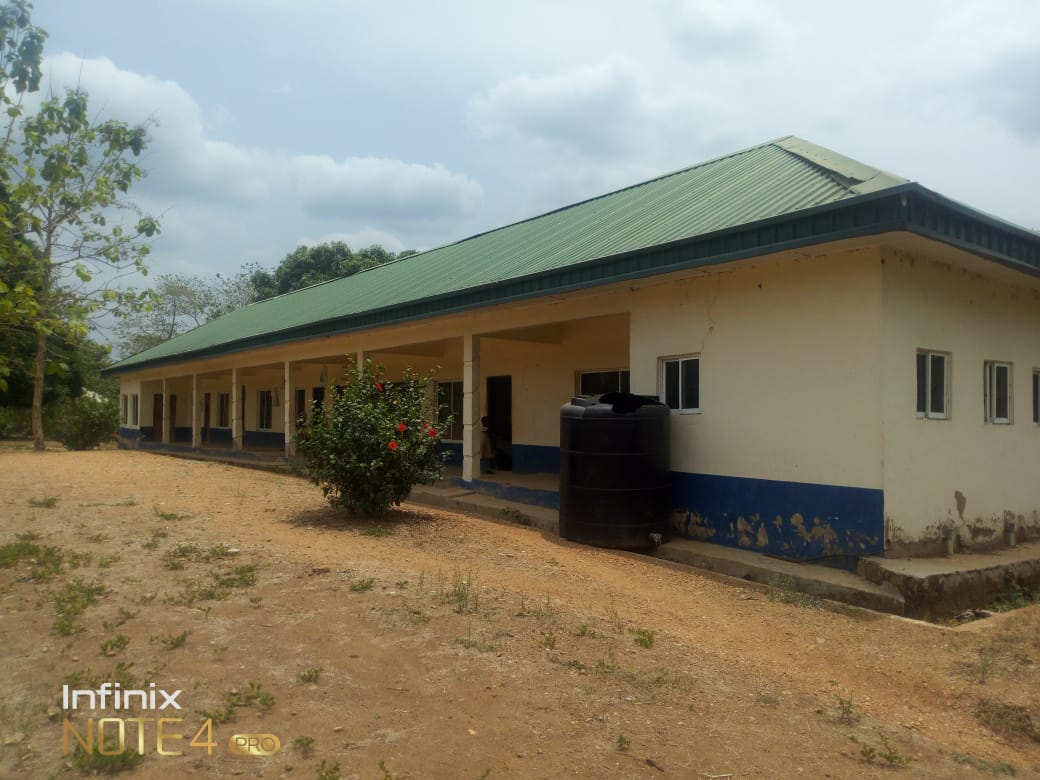
The Borum PHC without WASH facilities.
By Iwunze Jonathan
Nurse Caroline Monjok did not set out to become a water carrier. She trained as a midwife, took her posting to the Primary Health Care Centre in Borum community, Boki Local Government Area of Cross River State, and arrived with the expectation that a health facility — however remote — would have the basic infrastructure to function. What she found instead was a dry tube well, two broken geepee tanks collecting rainwater from the roof, and an abandoned concrete tank stand that had never been connected to anything. A relic. A monument to a water project that was counted as delivered and never actually was.
Read Also: The River That Feeds and Kills: Climate, contamination, and COP31 reckoning Nigeria must have
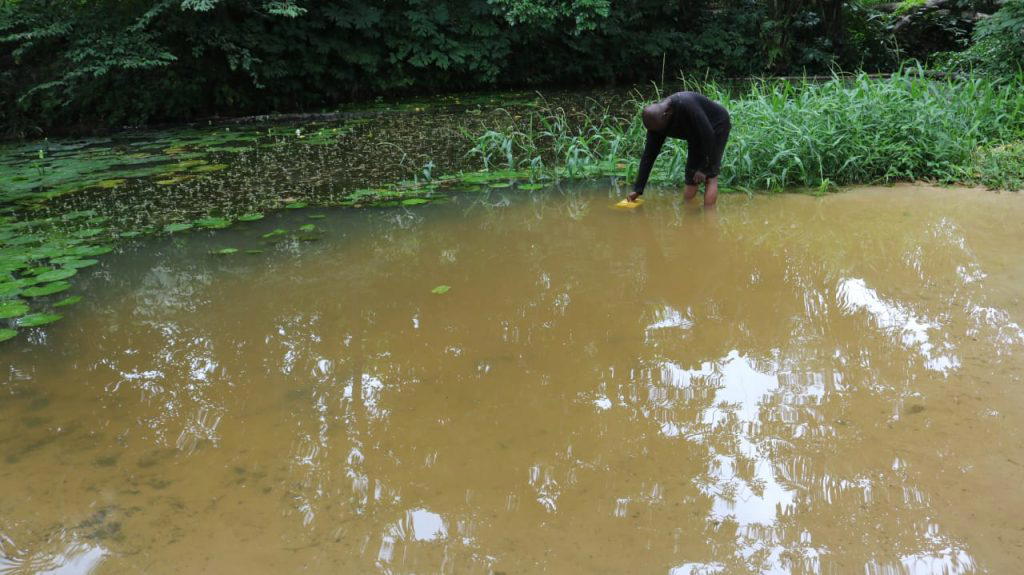
For eighteen months, she managed. She woke before the community stirred, filled buckets at the nearest manual borehole, and trekked the hills back to the facility before her first patient arrived. On the days when the boreholes broke down — which happened with regularity — she turned to Abang Kache, a small brook sheltered inside the forest, accessible only after a forty-minute walk across steep terrain. The water there was clear in appearance. It was also contaminated. Waterborne diseases tracked closely with the seasons in Borum, worsening whenever the boreholes failed and the community was forced back to the brook.
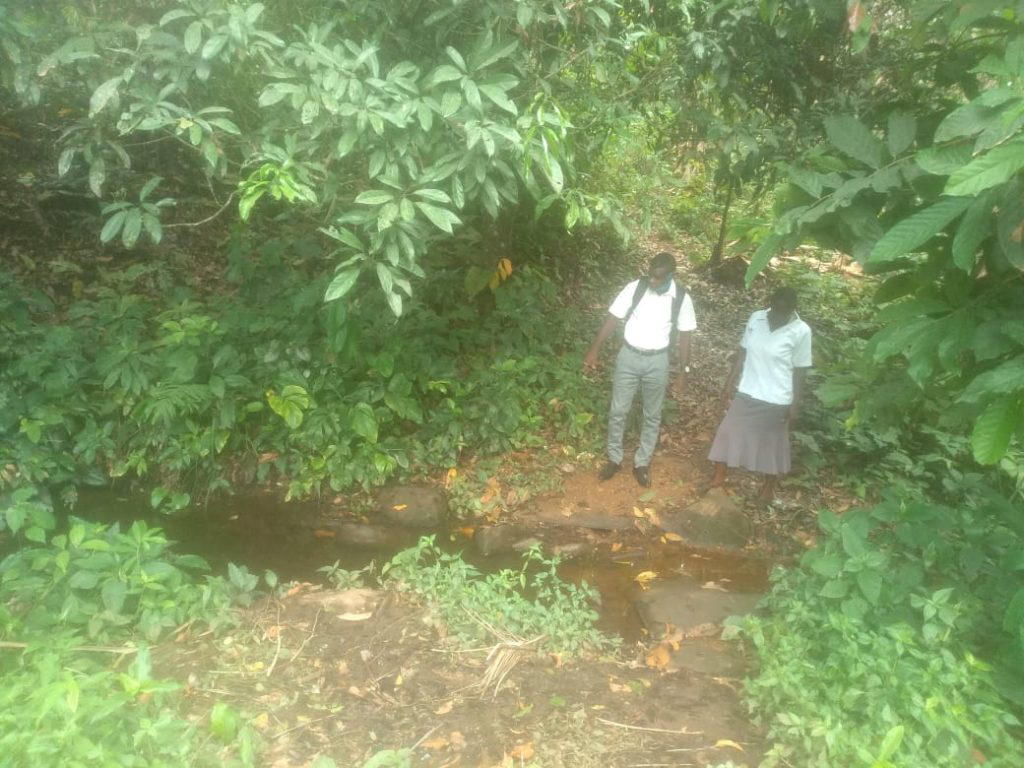
One morning, after delivering a baby, Nurse Monjok walked to the nearest borehole to fetch water to clean the mother and the newborn child. The women at the compound locked the borehole and sent her away. She returned to the facility empty-handed, and wept. Then she got up, and went to the forest.
“There was no drop of water in the staff quarters or in the PHC,” she recalled. “So I decided to trek to one of the boreholes to get water. To my greatest surprise, the women in whose compound the borehole was located refused to allow me to fetch water, and then locked the borehole.”
The facility Nurse Monjok was managing, according to any official record, was a functioning Primary Health Care Centre serving the Borum community. The data showed a health facility. The data did not show a nurse carrying water in a bucket through a forest to conduct midwifery.
What the Numbers Count — and What They Don’t
Nigeria’s water access figures, compiled through the Joint Monitoring Programme for Water Supply, Sanitation and Hygiene, report that 38 percent of the country’s rural population has access to basic water service. Another 26 percent have limited access. The remaining 37 percent are counted as having no service.
These numbers have become the basis for development planning, donor funding allocation, and Nigeria’s reporting to international bodies on progress toward Sustainable Development Goal 6 — clean water and sanitation for all. They are also, in communities like Borum, a form of fiction.
The fiction works like this: a borehole is constructed, commissioned, and entered into the dataset as a functional water point. It serves a community for a season, perhaps two. Then the pump fails. The solar panel cracks. The contractor who built it has moved on. The local government that commissioned it has no maintenance budget and no sensor to detect the breakdown. The community, without recourse, returns to the stream. But the data point remains. The borehole is still counted. The community is still marked as served.
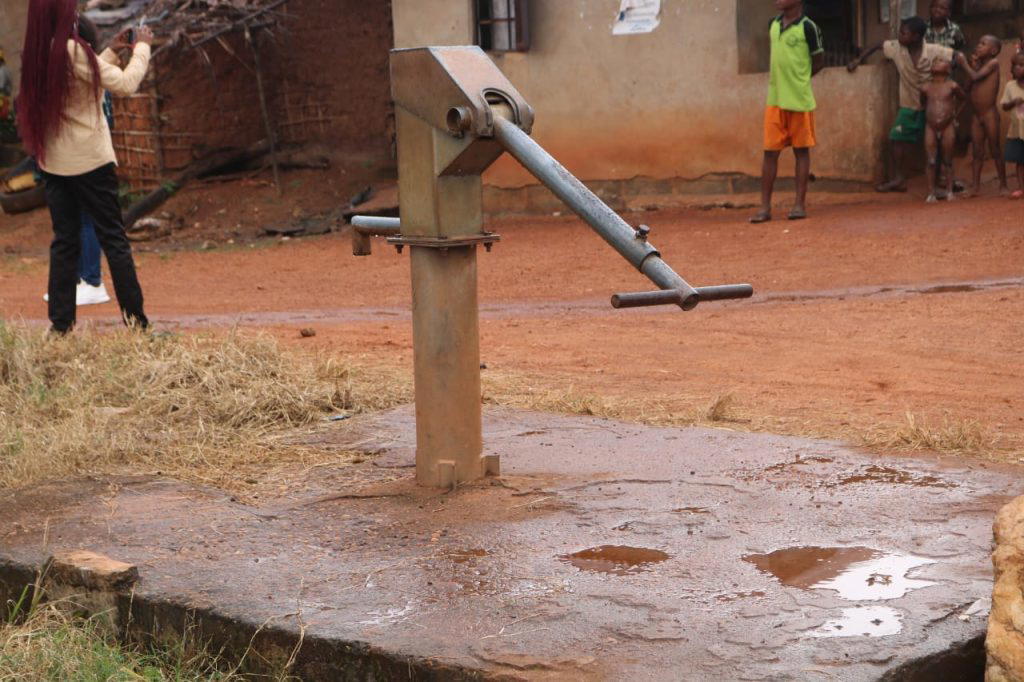
A 2017 World Bank diagnostic was blunt about the pattern: approximately 25 to 30 percent of Nigeria’s rural water points fail within the first year after installation. The report described a cycle it called “build, neglect, and rebuild” — where the political incentive for local officials lies in constructing new water points rather than maintaining existing ones, because construction is visible and maintenance is not.
The result is an accountability gap between what the infrastructure data records and what the communities actually experience. And that gap has a human face.
Forty-Five Minutes Each Way
In Afifia North village in Biase Local Government Area — less than a day’s drive from Borum — Patience Etowa has lived inside that gap for years.
Patience is a mother of three. Her daily routine begins before five in the morning, when she rises to start the forty-five-minute trek to Ogamena, a neighboring community, where a stream suitable for drinking can be found. She makes the trip, carries back what she can, prepares food, readies the children for school, and begins her day. By the time most people in urban Nigeria are brewing their morning tea, Patience has already walked ninety minutes for water.
The irony of her situation is visible from the road leading into her own community. A solar-powered borehole stands at the entrance to Afifia. It does not work — the water it draws is too saline for consumption. Two streams run within the village. They dry up during the dry season. What remains, Chief Obeten Ikwa explains, is water that the community uses for washing and bathing — and, inevitably, for processing cassava into garri and fufu, the staples of the local diet.
“During the dry season, the streams dry up and the solar powered borehole does not have the capacity to fill the water needs of the entire community as its operation is regulated,” Chief Ikwa said.
Patience knows that her children get sick. Diarrhea and dysentery come with regularity. She has come to regard it as normal — a concession to circumstance that should disturb anyone reading it from a distance. “I believe it is a part of human nature for little children to get sick sometimes,” she said, in the resigned tone of someone who has made peace with a condition that is not natural at all, but structural.
Her community is recorded as having water access. Afifia appears in no crisis register. The solar borehole at the entrance ensures that.
The ODF Community That Cannot Flush
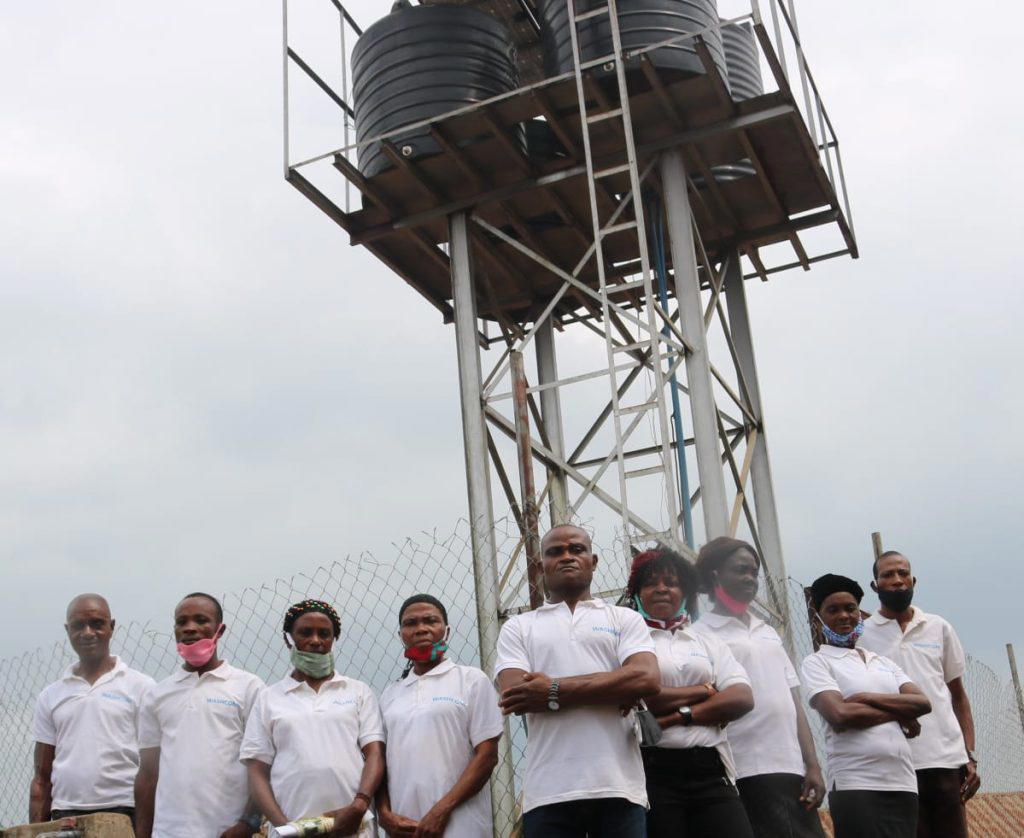
Ten minutes down the road from Afifia is Ikpariyong village in Ibogo community — a place that achieved something genuinely remarkable. Through years of volunteer-led enforcement by community watchdogs organized under the Water Supply, Sanitation and Hygiene Committee, Ikpariyong became open defecation free. Joseph Otu, the WASHCOM chairman, earned the nickname “shitman” from neighbors who resented his vigilance. He and his wife endured threats and mockery. They did not stop.
“I made many enemies in the community because people felt I was being overzealous for a job I was not even paid for,” Otu recounted. “But I did not mind because I wanted to ensure that change for the better is attained in our community.”
Their sacrifice was real. Sanitation-related diseases declined. The community was recognized as ODF. It was a public health achievement accomplished without government support, driven entirely by people who decided that their children’s lives were worth more than their neighbors’ convenience.
And yet Ikpariyong has no reliable water.
Both boreholes in the community — one solar-powered, one manual — are broken. Have been for years. Without water, maintaining toilet facilities is difficult. Without toilet facilities, open defecation creeps back. The hard-won ODF status that Otu and his wife built through years of thankless work is threatened daily by the failure of infrastructure that someone, somewhere, still counts as functional.
Chief Ojobe Ehom put it simply: “The boreholes stopped working not too long after they were constructed. Ever since they broke down, there have been frequent cases of diarrhea among my grandchildren and other children in the village as a result of consuming water from a nearby stream which is not safe.”
The Reform That Has to Come Before the Funding
UNICEF estimates that over 700 children under five die every day globally from diarrheal diseases linked to inadequate water and sanitation. In Nigeria’s rural south, where the communities in this report live, those deaths are not mysterious. They are traceable — to broken boreholes, to dried streams, to data systems that count installations rather than outcomes.
The World Bank’s 2017 diagnostic identified the root of the accountability failure clearly: government monitoring of rural water in Nigeria tracks the number of water points constructed, not the quality of service provided. Local politicians gain more — financially and reputationally — from building new water points than from maintaining existing ones. The data that flows upward reflects that incentive.
The solution is not beyond reach. CharityWater, an international organization working in similar contexts globally, developed a model that Nigerian policy could adapt: remote sensors installed on every water point at construction, local community ownership formalized from day one, and functionality data collected continuously rather than at commissioning. “That way we know that the project continued to work overtime,” the organization’s founder Scott Harrison has said.
Nigeria’s 2000 Water Supply and Sanitation Services policy already distributes responsibility across federal, state, and local governments, communities, and development partners. The architecture exists. What it lacks is the commitment to measure outcomes — clean water actually delivered — rather than outputs — boreholes actually built.
Until that changes, the statistics will show progress. In Borum, the nurse will keep walking to the forest. In Afifia, Patience will keep rising before five. In Ikpariyong, the boreholes will remain broken, and Otu will keep fighting to hold a sanitation achievement together with no water to sustain it.
The data will not record any of this. But the communities will keep living it.
Iwunze Jonathan is a WASH, Solutions and Data Journalist and founder of SPY Network Online Media. His reporting on water access, child rights, and rural governance spans over a decade of field work in Nigeria’s most underreported communities. He is a Bill & Melinda Gates Foundation fellow trained at Pan-Atlantic University’s Solutions and Data Journalism Academy.
Disclaimer
Comments expressed here do not reflect the opinions of Vanguard newspapers or any employee thereof.