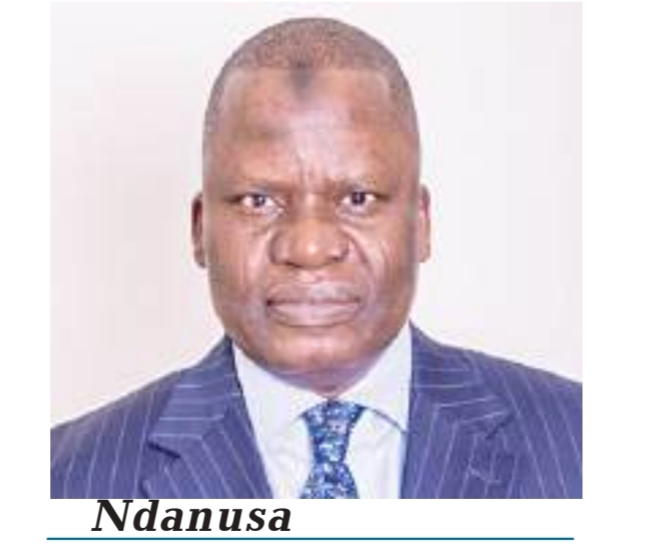
By Suleyman Ndanusa
Nigeria’s development discourse has traditionally been framed around familiar objectives of economic growth, poverty reduction, employment generation, industrialization, infrastructure development, and, more recently, financial inclusion. These are important aspirations. Yet beneath them lies a more fundamental question that is seldom asked but may ultimately determine the success or failure of all the others.
Who owns the economy?
The answer to this question matters because prosperity is not determined solely by how much wealth a nation creates. It is equally determined by who owns that wealth. Economic growth can coexist with widespread poverty if ownership of productive assets remains concentrated. Conversely, even modest economic growth can produce broad based prosperity when ownership is widely distributed across society.
The true dividing line between inclusive and exclusive economies is therefore not simply income; it is ownership.
This distinction is particularly important for Nigeria. Over the past two decades, significant progress has been made in expanding access to financial services. Millions of Nigerians who were once excluded from the formal financial system now possess bank accounts, mobile wallets, payment cards, and access to digital financial services. The fintech revolution has transformed the economics of payments, transfers, savings, and financial access.
Yet financial inclusion and wealth inclusion are not the same thing.
A citizen may own a bank account without owning productive assets. A trader may use digital payment platforms every day without holding a single investment. A salary earner may save regularly without participating in the ownership of businesses, infrastructure, or capital markets. In such circumstances, financial inclusion improves convenience but does not necessarily create wealth.
The next frontier of national development must therefore move beyond financial inclusion toward ownership inclusion.
The challenge before policymakers is no longer simply how to bring more Nigerians into the financial system. It is how to bring more Nigerians into the ownership economy.
This distinction is more than semantic. It reflects a profound shift in development philosophy. For decades, economic policy has focused primarily on income generation. While income remains important, sustainable prosperity depends on asset accumulation. Income finances current consumption. Ownership creates future wealth.
The societies that have successfully built large and resilient middle classes have done so not merely by creating jobs but by expanding ownership. Home ownership, pension assets, mutual funds, employee share ownership schemes, investment clubs, cooperative enterprises, and retail participation in capital markets have historically served as the foundations upon which broad based prosperity was built.
The rise of the middle class in many advanced economies was not driven solely by rising wages. It was driven by rising ownership.
This insight carries important implications for Nigeria.
If economic development is to become genuinely inclusive, ownership must become a deliberate national objective rather than an incidental by product of growth. The country requires what may be described as a National Ownership Strategy, a coordinated framework designed to expand citizen participation in the ownership of productive assets.
Such a strategy should begin with universal investment participation.
The objective should be simple but transformative. Every Nigerian should have a realistic pathway to becoming an investor.
This does not imply that every citizen must become a stock market expert or a sophisticated portfolio manager.
national experience.
The future belongs not merely to nations that create wealth.
It belongs to nations that create owners.
In the words of the Chairman, Heirs Insurance, Tony Elumelu, we must work towards democratizing prosperity.
Ndanusa is Chairman, Heirs Insurance Board Governance Committee & past DG /Chairman, Securities and Exchange Commission
Disclaimer
Comments expressed here do not reflect the opinions of Vanguard newspapers or any employee thereof.